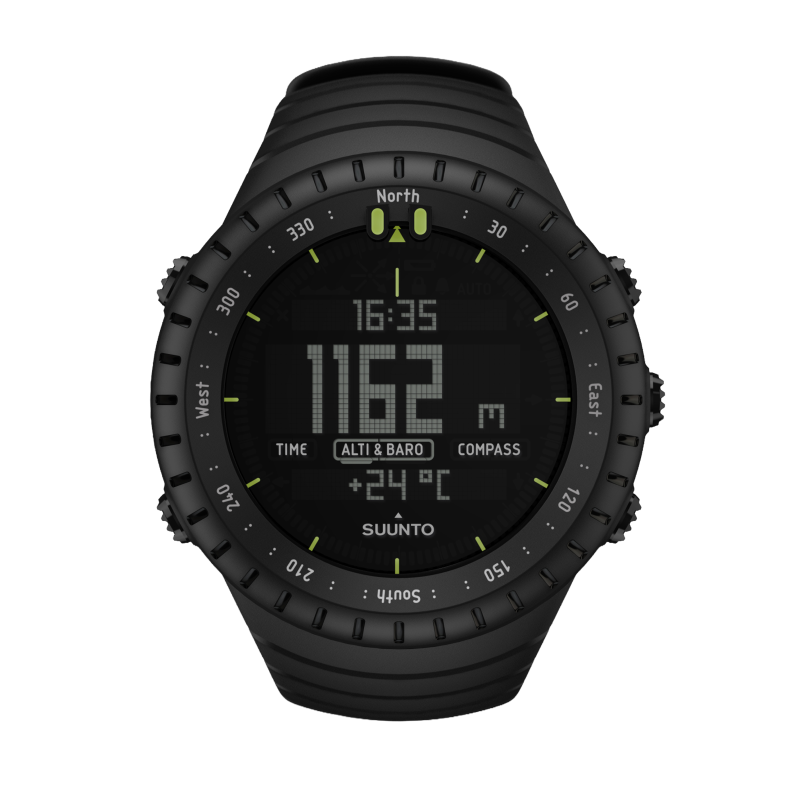
Photo via us.suunto.com
Suunto
Suunto Core Classic
$229.00
Altimeter, barometer and compass in an outdoors classic.
A storm alarm that actually wakes you up and a barometer worth trusting in the mountains. Not smart, deliberately.
Some links on this page are affiliate links. If you make a purchase, we may earn a commission at no additional cost to you. Our recommendations are editorially independent.
Quick verdict
- What kind of watch is the Suunto Core Classic?
- It is an outdoor instrument watch built around ABC sensors — altimeter, barometer and compass — with a digital display and a user-replaceable battery. It is not a smartwatch and does not run apps.
- Who is it best suited for?
- People who want at-a-glance altitude, pressure trend and heading information outdoors — hikers, travellers and riders — without charging a device every day or managing phone notifications on their wrist.
- What is its biggest strength?
- Self-contained outdoor instrumentation. The barometer-driven storm alarm and weather trend readouts work with no phone, no account and no pairing.
- What is its main limitation?
- There is no built-in GPS and no smartphone connectivity, so it cannot record routes, show notifications or sync activity data.
- Why choose it over a smartwatch?
- Because the battery is a replaceable cell rather than a nightly charge, and because the information it shows is fixed and immediate rather than app-dependent.
Where to buy — 1 retailer compared
Latest recorded prices from North American retailers. Every store we track is listed and the cheapest is badged. Amazon is our only paid partner, so it is shown first; the other links earn us nothing.
Amazon
amazon.comLowest pricePrice shown is our last recorded listing price
$229.00
Check price on Amazon
Key specs
- Water
- 30 m
- Weight
- 64 g
- Battery
- Replaceable
- Sensors
- ABC
What the features actually do
- Altimeter:Derives altitude from air pressure, so it reads elevation on a climb or a mountain pass without a satellite fix. Because it is pressure-based, it needs an occasional reference reset when the weather changes.
- Barometer:Tracks air-pressure trend over time. That trend line is the practical part: falling pressure usually means deteriorating weather ahead.
- Storm alarm:Alerts on a rapid pressure drop. It is the feature most owners cite, because it warns before conditions visibly change.
- Digital compass:Gives a heading directly on the wrist — useful for orienting a paper map or confirming a direction of travel.
- Sunrise and sunset times:Shown for a selected location, which is how you judge remaining daylight on a long day out.
- Replaceable battery:The Core Classic uses a user-replaceable cell rather than a rechargeable pack, so there is no daily charging routine.
- 30 m water resistance:Rated for rain, washing and swimming-depth splash exposure per Suunto's rating, not for diving.
- Weight:Around 64 g, a light package for a watch carrying three sensors.
Suunto Core Classic vs a smartwatch
These are different tools rather than better and worse versions of the same thing. The Core Classic measures the environment: pressure, altitude, heading. A modern smartwatch measures you and your phone: GPS tracks, heart rate, notifications, apps.
The practical split is power and connectivity. A smartwatch generally needs charging every day or few days and depends on a paired phone for much of its value; the Core Classic runs on a replaceable cell and works entirely on its own. In exchange, it does not record routes — it has no built-in GPS — and it will not show messages or calls.
If you want navigation traces, fitness metrics and connected features, a GPS or smartwatch is the right category. If you want weather and altitude awareness that is always on and never asks for a charger, this is what the Core Classic is for.
Does it make sense for riders and travel?
Suunto positions the Core as an outdoor watch, not specifically a motorcycle watch, so treat this as our read rather than a manufacturer claim.
For touring it has a narrow but real appeal: pressure trend and a storm alarm are genuinely useful when you are deciding whether to push on or stop, altitude readout suits mountain routes, and a replaceable battery means one less charger in the luggage. Because it does not connect to a phone, it also keeps notifications off your wrist while riding.
What it will not do is navigate. Route guidance stays with a phone mount or a dedicated GPS unit; the watch is a glance-down instrument alongside them.
Pros
- Altimeter, barometer and compass in one self-contained watch
- Storm alarm and pressure trend work with no phone or account
- User-replaceable battery instead of daily charging
- Light for a sensor watch at roughly 64 g
- Simple, fixed interface with nothing to set up or sync
Considerations
- No built-in GPS — it cannot record or navigate routes
- No smartphone connectivity, notifications or app ecosystem
- Altimeter is pressure-based, so it drifts as weather changes and needs re-referencing
- 30 m rating covers rain and swimming exposure, not diving
- A long-standing design; the display and styling are dated next to current screens
Who should buy it
A good fit if you are
- • Hikers, travellers and riders who want altitude and weather trend at a glance
- • Anyone who would rather replace a battery occasionally than charge a watch nightly
- • People who deliberately want a wrist device with no notifications
Consider something else if you are
- • If you need route recording or navigation, a GPS outdoor watch is the right tool
- • If you want notifications, payments and health tracking, a full smartwatch fits better
- • If you mainly want a durable analogue everyday watch, a traditional field watch is the simpler answer
Keep reading
Suunto Core Classic
Live price at Amazon. We may earn a commission at no extra cost to you.
What the reviewers say
Published reviews from around the web
“The downside: the Core is also one of the most expensive non-GPS watches we tested.”
Quotes are excerpts from the linked publications and remain the property of their authors. We link to the full review so you can read it in context.
Watch the reviews
Video reviews from creators

Ednilson Relógios
Suunto Core All Black – Review atualizado depois de 8 ANOS!
Watch on YouTube
Jay Flat Out
Suunto Core All Black Military Watch Review
Watch on YouTube
Dan Does Stuff
Suunto Core All Black Watch-8 Year Review
Watch on YouTubeVideos are hosted on YouTube and belong to their creators. Links open the original video on their channel.
Related buying guides
Free weekly newsletter
The Gear Post Weekly
New gear, useful gadgets and deals worth knowing about — one email a week. No spam, unsubscribe in a click.